In this case, you are allowed to use only commons (the Pauper part) and only those from the currently Standard-legal card pool (the Standard half). It's as simple as that. If the expansion symbol is black and it's from one of the core sets or blocks that Standard allow, it's a Standard Pauper deck.

That means it's legal in both the Pauper format and in Standard. So your deck will be legal to bring to an FNM. But how will you fare when placing yourself at such a disadvantage?
The answer depends heavily on your build, a little bit on how skillfully you play, and mostly on the luck of the draw. Having done this a few times, I can conclude that, while it's a fun and interesting experience if, and only if, you do not expect to win, your five-dollar entry fee is probably better spent completing playsets of commons. And your intent should not be to win but instead to spread the word about how superior a format Standard Pauper is to Money Standard.
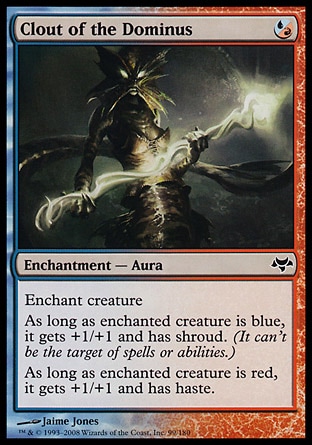 The best I ever did was to go 2-2, breaking even, back during Lorwyn-Alara-M10 Standard. It was then that one of the best performing decks in Standard Pauper was Dominus Deck Wins. Clout of the Dominus could turn your cheap Stream Hoppers, Riverfall Mimics, and Noggle Bandits into serious evasive threats that were difficult to remove. Backed up with Lorwyn block's efficient burn spells and the highly anticipated return of Lightning Bolt, this riff on Red Deck Wins was one of the best Sligh decks in the format's storied history.
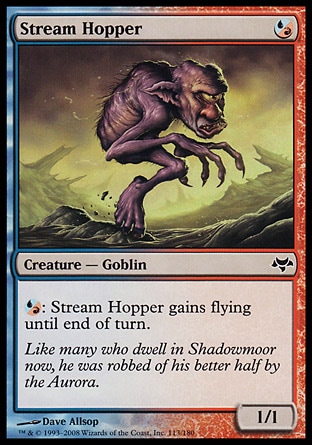 At that FNM, I got very lucky in addition to being well-practiced with the deck. I won my first match, then lost two. To break even, I had to face down the greatest challenge imaginable. My opponent was playing a deck worth well over $400 on the secondary market, the bad guy of Standard at the time: UB Faeries. With Scions of Oona, Jace Belerens, Bitterblossoms, and all the rest of the rares I could never, ever afford. I would need lots of luck. I had to resist tilt like a madman. And I had to make every single point of damage count and press whatever advantage lady luck graced me...
...and I beat him, 2-1!
In game one I curved out perfectly as he stumbled on mana. I can recall his snide grin quite well. Everybody gets bad draws, he surmised. He surely figured he could roll me easily and didn't even reach for his sideboard. In the second game, it was I who got stuck on a couple of lands, but DDW could run on two mana. By halfway through the match, I saw my opponent begin to sweat as he began to run out of counter magic. He was able to eke out a win by the seat of his pants.
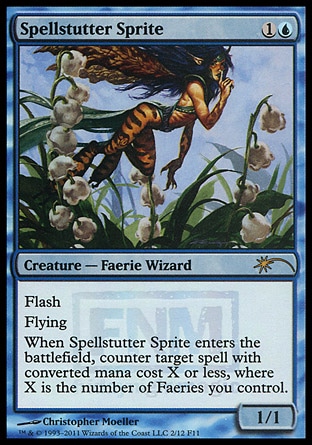 After that game, he sideboarded with a grimace on his face. I didn't even bring a board, but I'd shaken him enough. By the time of his second mulligan, he was tilted. My keep in game three featured a one, two, and three drop, and the all-important aura the deck was named after. He though he had me when my first turn Stream Hopper was answered by a perfect second-turn Bitterblossom. But this ended up being his foolish fateful mistake that cost him the match win!
 My enchantment was allowed to resolve instead of his Spellstutter Sprite being able to foil my plans. He proceeded to become angrier as he top-decked land after land, my dude breaking through the Faerie tokens while his life total was sent into the red by his own Bitterblossom. He damn near threw his deck across the room when he had to report his match loss and didn't even shake my hand as is customary after the match.
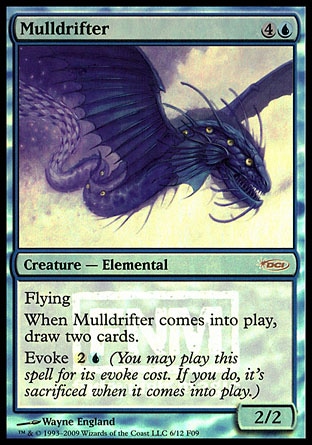 Never have I felt so victorious after a match of Magic: the Gathering. A five-dollar Pauper deck defeating a five-hundred dollar build, working hard for the win while my opponent hoped to buy his way to victory? Now that's priceless! Just like the FNM promotional copy of Mulldrifter I earned that night and treasure to this day.
Last week, I decided to see if I could repeat my success. Yet I had no such luck. This time instead of going aggro - which is what you should definitely do if you want to try this at home! - I ran UB Devotion build with a splash of White.
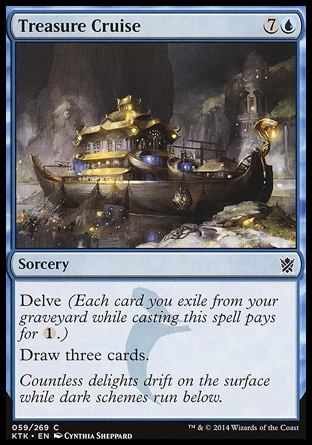
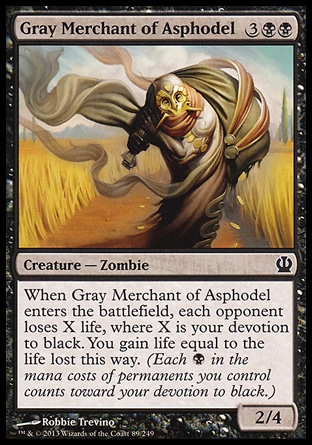 Now this may the best control deck in Standard Pauper right now. But it's built to control other Standard Pauper decks, packed with answers against the aggro decks in that format, not Money Standard, before re-filling its grip via Treasure Cruise and developing a board position where dropping a Gray Merchant of Asphodel guarantees the control deck a high life total while annihilating the aggressive opponent's spindown d20. It is NOT at all effective against the aggro decks current ramping and rolling in Money Standard.
 This time I did not win a single match.
 In fact, I didn't win a single game! The best I did was get a GW Devotion Ramp player down to ten...but it was his fetchlands that did most of the work for me and he was more interested in seeing how big a Timmy play he could make with all the mana he was generating. He could have swung in for lethal with nothing I could possibly do to survive several turns in a row.
However, I still considered my foray into Money Standard with a Standard Pauper deck to be successful. This is because I merely wanted to spread the word that this budget format existed, that it was more affordable than regular FNM style Standard, and actually required more skill since rares and mythics didn't auto-win games for the players.
But most importantly, because of this exciting announcement:
Starting on Tuesday, March 31st, 2015, at 6:00 PM, just after Dragons of Tarkir is released, I will be hosting Standard Pauper tournaments In Real Life at my favorite little local hobby games store, Flights of Fantasy in my hometown of Albany, New York!
These events will be held to the same deck construction requirements as the Standard Pauper events that have been held on Magic Online for years through PDCMagic.com. To assist the shop in doing what stores need to do (make a little dough!) there will be a tiny entry fee of just two dollars. That's it!
There will be prize support, too. If you win, you get to pick forty - count 'em - forty commons from the store's massive "dump box" full of non-rares sold for ten cents a pop regardless of their full market value. You can effectively double your money if you take your deck to the top! For runners-up, you get your entry fee back by selecting twenty commons. Those who make Top Four end up losing only a dollar by picking ten commons from the prize pool. A small price to pay for all the fun you just had!
And those who didn't make the cut? At least they didn't break the bank :-)
This is going to be a fantastic fun event and I cannot wait to get started! I'm hoping that tons of young people who would otherwise be discouraged by running into wealthy Magic players at FNM and quit will be encouraged to stick with the game via Standard Pauper. And if adults with kids and tight budgets are feeling like Magic is too expensive to enjoy competitively, this series can and will prove them wrong.
As for me, I won't have to handicap myself so harshly any longer by bringing my Standard Pauper decks to Money Magic FNMs. I can have fun competing in this awesome format just like I did on MTGO. Because that terrible software is current killing Standard Pauper...and Standard Pauper is worth saving!
So I refuse to just log off and let the format die. The only way to fight for the format is to get some boots on the ground and some bodies into the local game stores. And two weeks from now, the full frontal attack on Wizards of the Coast insulting insistence one releasing inferior software and prohibitive expenses on paper is going to enter the battlefield with guns blazing, baby!
If you're in the area, I sincerely hope you will join us two Tuesdays from this one. And if you're far away and connected to me via MTGO or PDCMagic and this blog, then stay tuned. I fully intend to provide the Online Standard Pauper community with as much metagame data as I can gather and share it in hopes that Online players can also benefit from IRL play.
Until then, thanks so much for reading and sharing with me this exciting announcement and a bit of my personal Pauper history. As always, good luck & have fun! Peace,
- C
